
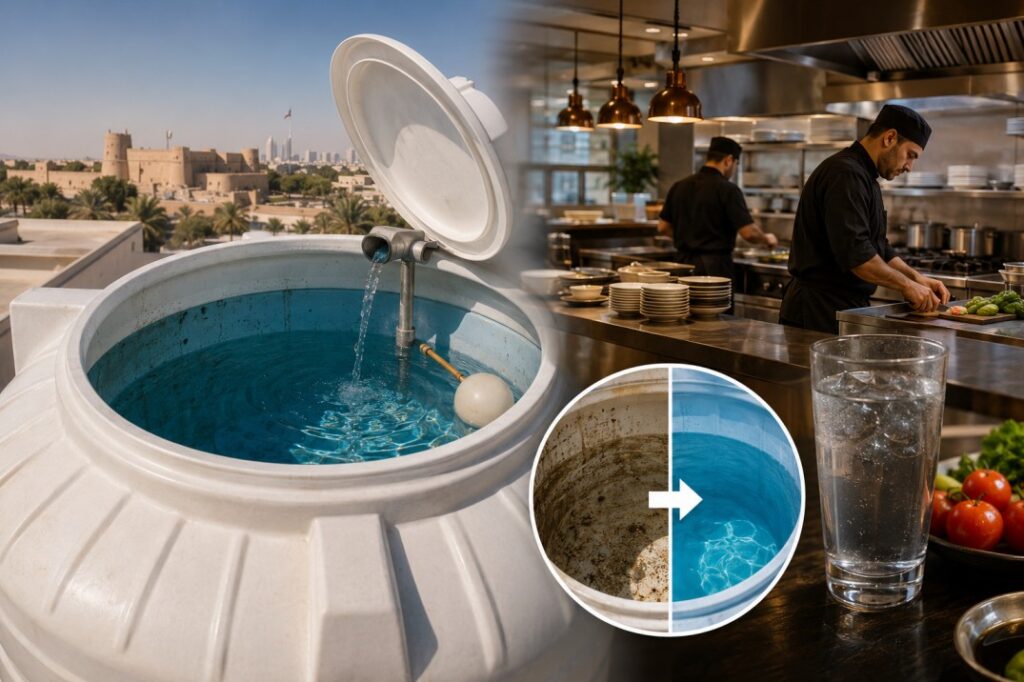
In the restaurant industry, success is often measured by food taste, customer service, and ambiance. But behind every plate served in Al Ain’s busy food scene lies something far more fundamental—water quality.
Every ingredient washed, every dish cleaned, every beverage prepared depends on water stored in tanks. Yet, surprisingly, water tank cleaning is one of the most neglected hygiene practices in restaurants.
Over time, storage tanks accumulate sediment, bacteria, algae, and rust particles. These contaminants do not stay isolated—they directly enter the kitchen workflow.
In a competitive food market like Al Ain, where hygiene inspections are strict and customer expectations are high, ignoring water tank maintenance is a serious business risk.
The Problem No One Talks About in Restaurants
Most restaurant owners in Al Ain focus on what customers can immediately see—clean floors, polished counters, hygienic uniforms, and a shining kitchen. But the real risk is not in plain sight. It quietly builds up in places that are rarely checked, especially in water storage tanks located underground or on rooftops.
Over time, these tanks become a hidden collection point for fine desert dust settling at the bottom, slimy bacterial layers forming on internal walls, rust particles entering from aging pipelines, and stagnant water zones where contamination develops silently. You may never see it, but this water flows directly into everything—food preparation, ice, coffee, dishwashing, and even handwashing.
Why Al Ain Restaurants Face a Higher Hidden Risk
Al Ain’s environment makes this issue even more serious. The combination of high temperatures, constant dust exposure, and continuous water storage creates ideal conditions for contamination to grow faster than expected.
Even when a tank looks clean from the outside, the inside can still carry odor-causing bacteria, subtle water discoloration issues, and hidden microbial growth that gradually spreads through the entire plumbing system. In a restaurant environment, this is not isolated—it becomes part of every single service served to customers.
One Inspection Can Change Everything
Food safety inspections today go far beyond kitchen appearance. Authorities increasingly focus on overall hygiene systems, and water quality has become a critical checkpoint.
A neglected water tank can quickly lead to failed hygiene inspections, temporary closure warnings, customer complaints about unusual taste or smell, and long-term damage to brand reputation that takes months to recover. In this industry, even a small oversight can escalate into a serious operational setback.
What Professional Cleaning Actually Does
Proper water tank cleaning is not just routine maintenance—it is a complete system reset. A professional cleaning process removes all stored water, eliminates accumulated sludge and sediment, thoroughly cleans internal tank surfaces using high-pressure methods, applies anti-bacterial disinfection treatments, and finally refills the tank with a quality check to ensure safety.
The transformation is not only visual. The real difference is experienced in the clarity, taste, and smell of the water used across your entire restaurant operation.
How Often Restaurants Should Clean Water Tanks
For restaurants operating in Al Ain, water tanks should ideally be cleaned every three to four months. High-traffic kitchens or busy commercial setups may require even shorter maintenance cycles to ensure consistent hygiene standards. Any maintenance work, plumbing repair, or signs of contamination should immediately trigger a cleaning cycle rather than waiting for visible problems to appear.
The Real Business Impact of Clean Water
Clean water tanks directly influence the foundation of a restaurant’s success. They ensure consistent food taste, safer kitchen operations, and stronger customer trust without needing explanation.
Customers may never ask about your water system, but they will always notice when something is off. In the food industry, water quality silently shapes reputation, and reputation decides long-term success.
Conclusion
A restaurant can invest heavily in interiors, branding, and menus—but if the water system is ignored, everything silently suffers underneath.
In Al Ain’s competitive food industry, water tank cleaning is not maintenance—it’s survival hygiene.
Because your customers may never see your water tank…
but they will always experience what comes from it.
📞 Contact the Experts Today
Protect your water, protect your health.
📞 Phone: +971 2 559 9492
📞 Mobile: +971 56 412 8476
New Blue Diamond Contracting and General Maintenance LLC
Your trusted partner for aggressive, professional water tank cleaning in Al Ain.
Frequently Asked Questions (FAQs)
Why is water tank cleaning important for restaurants in Al Ain?
Water tank cleaning is essential for restaurants in Al Ain because stored water is used in food preparation, beverage making, dishwashing, and overall kitchen hygiene. Dirty water tanks can accumulate bacteria, algae, sediment, and rust, which may affect food quality, customer health, and restaurant hygiene inspection results.
How often should restaurants clean their water tanks in Al Ain?
Restaurants should ideally schedule professional water tank cleaning every 3 to 4 months. High-traffic restaurants, commercial kitchens, and food service facilities may require more frequent cleaning due to increased water usage and faster contamination buildup caused by Al Ain’s dusty and hot climate.
What are the risks of not cleaning restaurant water tanks regularly?
Neglecting water tank maintenance can lead to bacterial contamination, unpleasant water odor, discoloration, poor food quality, failed municipality hygiene inspections, customer complaints, and damage to restaurant reputation. In severe cases, restaurants may even face temporary closure warnings from authorities.
What does professional restaurant water tank cleaning include?
Professional water tank cleaning involves complete water drainage, sludge and sediment removal, high-pressure internal cleaning, anti-bacterial disinfection, and final water quality inspection before refilling the tank. This process helps maintain safe, clean, and hygienic water throughout restaurant operations.
How does clean water improve restaurant business performance?
Clean water directly supports better food taste, safer kitchen operations, improved customer confidence, and compliance with UAE food safety standards. Customers may not see the water system, but they immediately notice issues related to taste, cleanliness, and hygiene, which strongly impacts restaurant reputation and long-term success.