
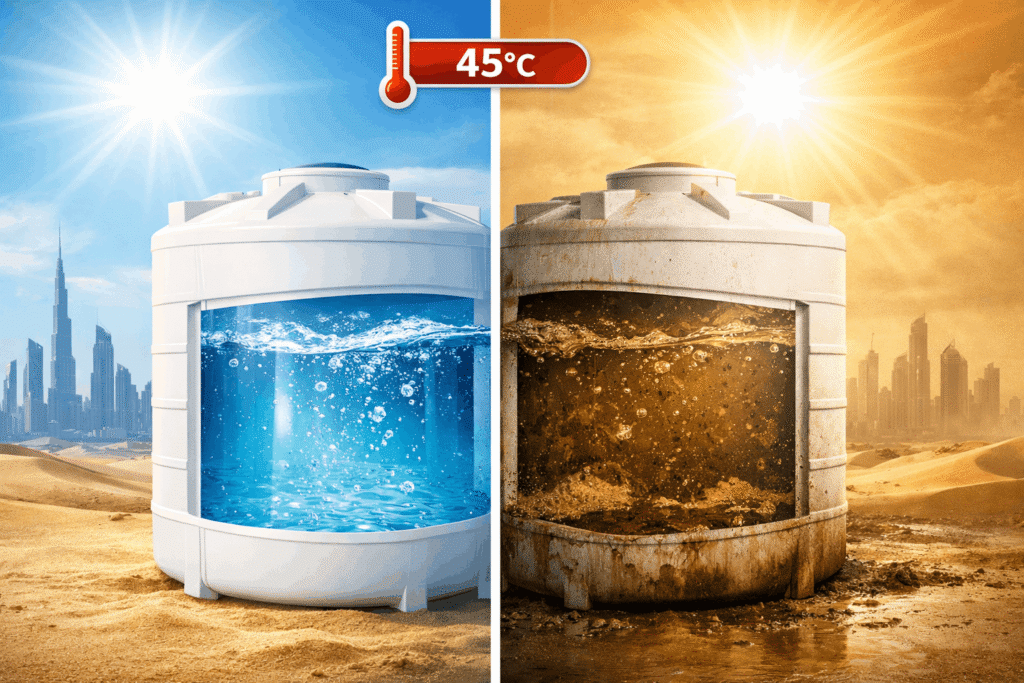
Water tanks serve as essential infrastructure throughout the UAE, storing potable water for residential buildings, commercial facilities, hotels, and industrial complexes. However, the extreme heat and unique environmental conditions of hot climates like the UAE create accelerated bacterial growth, sediment accumulation, and contamination risks that demand specialized maintenance protocols. Understanding proper cleaning frequencies for water tanks ensures safe drinking water, regulatory compliance, and long-term system performance in challenging desert environments.
The Impact of UAE's Climate on Water Quality
The UAE’s scorching temperatures, which regularly exceed 45°C during summer months, create ideal conditions for rapid bacterial multiplication within storage systems. Water tanks exposed to direct sunlight or located in poorly ventilated areas can see internal temperatures rise dramatically, accelerating algae growth, biofilm formation, and pathogenic bacteria development. These elevated temperatures transform storage containers into potential breeding grounds for harmful microorganisms within weeks rather than months.
Dust storms, sand particles, and airborne contaminants prevalent in desert climates infiltrate even well-sealed systems through ventilation points and overflow pipes. This constant environmental pressure means storage reservoirs in the UAE face contamination challenges far exceeding those in temperate climates. The combination of heat and particulate matter creates sediment layers that harbor bacteria while reducing storage capacity and water quality.
Recommended Cleaning Frequencies for UAE Conditions
Professional water tanks cleaning should occur every three to six months in the UAE’s hot climate. This frequency far exceeds the annual cleaning recommended for cooler regions, reflecting the accelerated degradation caused by extreme heat. Residential buildings typically require cleaning every six months, while commercial facilities, hospitals, schools, and food service establishments should schedule quarterly maintenance to ensure consistent water quality and health code compliance.
Several factors influence optimal cleaning schedules for individual properties. Water tanks serving large populations require more frequent attention than those supporting smaller households. Storage systems exposed to direct sunlight need more regular maintenance than shaded or underground installations. Properties near construction sites or in particularly dusty areas should increase cleaning frequency to combat elevated sediment accumulation.
The Dubai Municipality and other UAE health authorities mandate regular cleaning and disinfection of potable water storage systems, with many jurisdictions requiring professional service at least twice annually. Compliance documentation protects property owners from regulatory penalties while demonstrating commitment to resident and occupant health.
Signs Your Storage System Needs Immediate Attention
Between scheduled cleanings, water tanks should be monitored for warning signs indicating immediate professional intervention. Discolored water—appearing brown, yellow, or cloudy—signals sediment disturbance or contamination. Unpleasant odors, metallic tastes, or visible particles in tap water indicate deteriorating storage conditions requiring urgent attention.
Reduced water pressure throughout the building may result from sediment blocking outlet pipes or accumulated debris restricting flow. Visible algae growth on tank walls, biofilm development, or rust formation demands immediate cleaning and disinfection. Any unusual symptoms among building occupants—gastrointestinal issues, skin irritations, or respiratory problems—could indicate waterborne contamination necessitating emergency service and water quality testing.
Professional Cleaning Process and Best Practices
Professional water tank cleaning follows systematic protocols ensuring thorough sanitation and contamination removal. Certified technicians begin by completely draining storage systems, then manually scrub interior surfaces to remove biofilm, algae, sediment, and mineral deposits. High-pressure washing eliminates stubborn contaminants while reaching difficult corners and crevices.
Following mechanical cleaning, technicians apply approved disinfectants that eliminate remaining bacteria, viruses, and pathogens. After appropriate contact time, systems are thoroughly flushed to remove disinfectant residues before refilling with fresh water. Professional services include inspection of structural integrity, seals, valves, filters, and ventilation systems, identifying potential problems before they compromise water quality.
Reputable companies provide detailed service documentation including before-and-after photographs, water quality test results, and maintenance recommendations. This documentation proves invaluable for regulatory compliance, property transactions, and long-term maintenance planning.
Health Risks of Neglected Maintenance
Neglected water tanks become reservoirs for dangerous pathogens including Legionella bacteria, E. coli, and other disease-causing microorganisms. Legionnaires’ disease, a severe pneumonia form transmitted through contaminated water vapor, poses particular risks in building systems with poorly maintained storage. Children, elderly residents, and immunocompromised individuals face elevated vulnerability to waterborne illnesses.
Contaminated drinking water causes gastrointestinal infections, skin conditions, and respiratory issues that impact quality of life while creating liability concerns for property owners and facility managers. The economic costs of waterborne illness outbreaks—including medical expenses, legal liability, reputation damage, and emergency remediation—far exceed preventive maintenance investments.
Protecting Your Investment and Community Health
Regular professional maintenance extends system lifespan while protecting significant infrastructure investments. Proper cleaning prevents corrosion, structural degradation, and premature failure that necessitate expensive replacements. Clean storage systems operate more efficiently, maintaining better water pressure and quality throughout distribution networks.
For property managers and building owners, documented maintenance programs demonstrate due diligence and regulatory compliance. Professional cleaning records support insurance claims, defend against liability issues, and provide transparency for residents and tenants. These programs enhance property values while fulfilling ethical obligations to provide safe, clean drinking water.
Conclusion
The UAE’s challenging climate demands vigilant attention to water tank maintenance and cleaning schedules. By implementing professional cleaning every three to six months, monitoring for warning signs, and partnering with certified service providers, property owners ensure safe drinking water for their communities. Don’t compromise on water quality—schedule professional inspection and cleaning today to protect health, comply with regulations, and maintain the integrity of your critical water storage infrastructure.
Ready to Make the Smart Move?
Let Blue Diamond General Maintenance help you keep your villa spotless, dust-free, and healthy—all year long. From routine maintenance to deep cleaning, we’ve got you covered.
📞 Call us: +971 56 705 4223
📧 Email: Contact@bluediamondfm.com
🌐 Website: http://watertankcleaninguae.com
Frequently Asked Questions (FAQs)
How long does professional water tank cleaning take?
Professional cleaning typically requires 4-6 hours for average residential tanks (5,000-10,000 liters), including draining, scrubbing, disinfection, flushing, and refilling. Larger commercial systems may require 8-12 hours or multiple service days. Technicians schedule work to minimize disruption, often performing services during low-usage periods. Buildings should arrange temporary water supplies or coordinate cleaning when occupancy is reduced.
What certifications should I look for when hiring cleaning professionals?
Seek companies with Dubai Municipality approval, ISO certifications for quality management, and technicians trained in water hygiene protocols. Reputable providers carry appropriate insurance, use food-grade disinfectants approved by UAE health authorities, and provide comprehensive service documentation. Request references from similar properties and verify the company’s regulatory compliance history before contracting services.
Can I clean my water tank myself, or should I hire professionals?
While small residential tanks can be cleaned by knowledgeable owners, professional service is strongly recommended. Professionals possess specialized equipment, approved disinfectants, safety gear, and expertise to thoroughly clean while identifying structural issues. Tank interiors pose confined space hazards requiring proper safety protocols. Professional cleaning ensures regulatory compliance and provides documentation protecting against liability. The relatively modest cost delivers significant value through thorough sanitation and peace of mind.
Does tank material affect cleaning frequency requirements?
Yes, tank material influences maintenance needs. Stainless steel tanks resist bacterial growth and corrosion better than plastic or fiberglass alternatives, potentially extending intervals slightly. However, all materials require regular cleaning in UAE conditions. Plastic tanks may develop cracks or UV damage in extreme heat, necessitating more frequent inspection. Concrete tanks require careful monitoring for lining deterioration. Regardless of material, the harsh UAE climate demands consistent maintenance schedules.
What happens to our water supply during the cleaning process?
Buildings lose access to stored water during cleaning, typically 4-8 hours. Most properties receive municipal water continuously, so taps continue functioning during service, though pressure may reduce. For buildings relying entirely on tank storage, coordinate cleaning when usage is minimal, arrange temporary water supplies, or clean tanks individually in multi-tank systems. Professional companies help plan service timing to minimize inconvenience while ensuring thorough cleaning.