
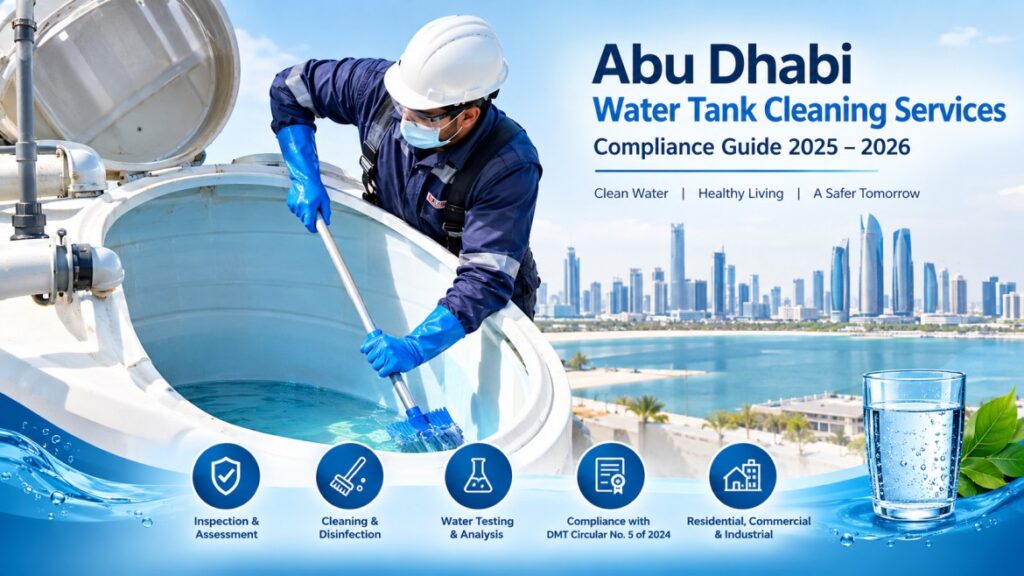
Could the water your family uses every day be exposed to hidden contamination before it reaches your taps? Water storage tanks play an essential role in residential buildings, villas, apartments, offices, restaurants and commercial facilities across Abu Dhabi. However, sediment accumulation, damaged covers, deteriorating tank surfaces and inadequate maintenance can affect water quality over time.
Even when the incoming water supply has been treated, the storage system and internal plumbing must be properly maintained. A tank that appears clean from the outside may still contain deposits or microbial growth that cannot be identified through a simple visual check.
Professional water tank cleaning in Abu Dhabi helps property owners manage contamination risks, maintain hygienic storage conditions and support compliance with applicable local requirements. Understanding potential health risks, inspection procedures and maintenance responsibilities is an important step towards protecting your family, employees, customers and building occupants.
Why Is Water Tank Cleaning Important in Abu Dhabi?
Water tanks can accumulate dust, suspended particles, sediment, rust and other unwanted materials. Damaged covers, poorly sealed access points, leaking connections and inadequate cleaning practices may introduce additional contamination risks.
Abu Dhabi’s climate also makes responsible water storage maintenance important. Dust exposure, high ambient temperatures and ageing tank components can create challenges for property owners and facility managers.
Regular inspection and appropriate cleaning can help to:
- Remove accumulated sludge, sediment and deposits.
- Reduce avoidable contamination risks through suitable cleaning and disinfection.
- Identify damaged covers, leaking connections and visible deterioration.
- Maintain better hygiene in residential and commercial water storage systems.
- Support water sampling and laboratory testing when required.
- Maintain service records for property management and compliance purposes.
Cleaning alone does not guarantee that water is safe for drinking. When contamination is suspected, suitable water quality testing and corrective action may also be necessary.
What Causes Water Tank Contamination?
Understanding the common causes of contamination helps property owners recognise why routine maintenance matters.
- Sediment and Sludge Accumulation
Particles can gradually settle at the bottom of a storage tank. If deposits are not addressed, they may affect water clarity and indicate that the tank requires inspection and cleaning.
- Damaged or Loose Tank Covers
An improperly secured cover may allow dust, insects and other contaminants to enter the tank. Maintaining a suitable cover and secure access points is an important part of protecting stored water.
- Biofilm and Microbial Growth
Microorganisms can develop on wet internal surfaces under favourable conditions. Appropriate cleaning and disinfection procedures help manage this risk, although the effectiveness of the process depends on the tank’s condition and the methods used.
- Corrosion and Deteriorating Materials
Damaged coatings, corroded fittings, cracks and deteriorating tank surfaces may compromise the storage system. Inspection can help identify visible defects that require repair or further assessment.
- Inadequate Cleaning and Disinfection
Removing visible dirt without following suitable disinfection procedures may leave contamination risks unresolved. Cleaning methods and disinfectants must be appropriate for drinking water storage systems.
- Poor Plumbing Conditions
Leaks, cross-connections and other plumbing defects may introduce contaminants independently of the tank itself. A comprehensive maintenance assessment should consider the tank, its fittings and relevant plumbing connections.
What Diseases Can Be Associated with Contaminated Water?
Water contaminated with harmful microorganisms can transmit several diseases. The actual health risk depends on the contaminant, the level of exposure and the individual’s health.
- Diarrhoea and Gastrointestinal Infections
Certain bacteria, viruses and parasites can cause diarrhoea, nausea, vomiting and abdominal cramps. Severe cases may lead to dehydration, particularly in young children, older adults and people with weakened immune systems.
- Typhoid Fever
Typhoid fever is caused by Salmonella Typhi and can spread through food or water contaminated by an infected person’s faeces. Symptoms may include prolonged fever, weakness, headache and abdominal discomfort.
- Cholera
Cholera is an intestinal infection caused by Vibrio cholerae. It can cause severe watery diarrhoea and rapid dehydration. Contaminated water and inadequate sanitation are recognised transmission risks.
- Dysentery
Certain bacterial and parasitic infections can cause dysentery, which may involve diarrhoea containing blood, abdominal pain and fever. Contaminated water can be one route of transmission.
- Hepatitis A
Hepatitis A is a viral infection that affects the liver. It can spread through contaminated food or water and may cause fatigue, nausea, abdominal discomfort and jaundice.
Important: These illnesses are associated with particular forms of water contamination. Their presence should not be attributed to a specific property’s water tank without appropriate medical and water quality evidence.
Professional tank maintenance is one part of a wider water hygiene strategy that includes safe plumbing, appropriate disinfection and testing when necessary.
Abu Dhabi Municipality Water Tank Cleaning Compliance: 2025–2026 Guide
Property owners, building managers and facilities management teams should understand the local requirements governing drinking water storage tank inspection, cleaning, sampling and disinfection.
What Does Circular No. 5 of 2024 Say?
The Abu Dhabi Department of Municipalities and Transport (DMT) issued Circular No. 5 of 2024 concerning companies licensed to clean drinking water tanks.
The circular requires licensed cleaning companies to comply with the applicable requirements under Administrative Decision No. 26 of 2018 concerning the general health and safety of drinking water tanks in Abu Dhabi. It also addresses approved laboratory testing and sampling by a specialised laboratory technician, including the recording of sample temperature and volume and preparation of a report containing basic building information.
Official reference: Abu Dhabi Drinking Water Tank Cleaning Regulations
Abu Dhabi also has a Code of Practice for the Inspection and Cleaning of Customer Water Storage Tanks. This framework addresses responsibilities relating to tank inspection, sampling, cleaning and disinfection.
Official code reference: Inspection and Cleaning of Customer Water Storage Tanks
These documents provide important guidance for property owners and service providers. For 2025–2026 work, confirm the latest applicable requirements, amendments and instructions with the relevant Abu Dhabi authority or water service provider.
Practical Compliance Steps for Property Owners
To support responsible water tank maintenance, property owners and facility managers should:
- Engage a cleaning company holding the appropriate licence and authorisation for the service.
- Ensure that the tank can be safely accessed for inspection and maintenance.
- Arrange cleaning and disinfection in accordance with applicable requirements.
- Arrange approved sampling and laboratory testing when required.
- Keep cleaning reports, test results and maintenance records available for review.
- Address defects identified during inspection.
- Follow official notices and complete required corrective actions within the specified timeframe.
The requirements applicable to a particular building may depend on the relevant regulations, tank configuration and instructions issued by the responsible authority.
What Happens If a Water Tank Does Not Meet Inspection Requirements?
If an inspection identifies poor hygiene, accumulated deposits, damaged components or other concerns, corrective work may be necessary.
Depending on the findings and applicable requirements, this could involve additional cleaning, disinfection, repairs, water sampling, laboratory testing or a follow-up inspection.
Property owners should review inspection findings carefully and respond to any official instructions within the specified timeframe. Penalties or other enforcement measures should not be assumed without reference to the applicable rules and the circumstances of the case.
How Often Should a Water Tank Be Cleaned in Abu Dhabi?
There is no single interval that should automatically be assumed to apply to every property without checking the applicable requirements.
The appropriate schedule depends on the relevant code, tank characteristics, building use, condition and instructions from the responsible authority or water service provider. Property owners should confirm the requirements applicable to their premises instead of relying solely on a generic online recommendation.
Routine visual checks, planned maintenance, timely repairs and appropriate water quality testing can help support a well-managed storage system.
What Does Professional Water Tank Cleaning Include?
Effective water tank cleaning involves more than draining the tank or washing visible surfaces. The process should be appropriate for the tank’s construction, condition and intended use.
A professional service may include the following steps, subject to the applicable procedure and site conditions.
Step 1: Initial Inspection
The service team assesses accessible tank surfaces, covers, fittings and visible defects. Any concerns that require repair or further investigation should be identified.
Step 2: Safe Preparation
The work area is prepared, and suitable access, equipment and safety controls are established. Tank entry, where necessary, requires appropriate authorisation and confined-space safety procedures.
Step 3: Removal of Sediment and Deposits
Accumulated sludge and deposits are removed using suitable methods and equipment. The objective is to address visible contamination without damaging the tank’s internal surfaces.
Step 4: Internal Surface Cleaning
Accessible internal surfaces are cleaned using methods appropriate for the tank material and drinking water storage application.
Step 5: Suitable Disinfection
An appropriate disinfection procedure is carried out in accordance with the applicable requirements. Chemicals must be suitable for the intended application and used at the correct concentration and contact time.
Step 6: Rinsing and Flushing
Where required by the procedure, the tank and associated system are rinsed or flushed to manage residual cleaning agents and prepare the system for return to service.
Step 7: Sampling and Testing When Required
Water samples may need to be collected and analysed through an appropriate laboratory. Where testing is required, it should follow the applicable sampling procedure and acceptance criteria.
Step 8: Final Checks and Documentation
The service team checks the completed work and records relevant findings. Property owners should retain service reports and any required laboratory results.
The exact procedure depends on the tank, the applicable requirements and the findings during inspection. Cleaning should never be treated as a substitute for repairing a damaged tank or resolving an identified plumbing problem.
Warning Signs That Your Water Tank Needs Attention
Do not wait for a major water quality concern before arranging an assessment. Consider requesting professional advice if you notice:
- Unusual water colour, smell or taste.
- Visible particles or sediment in the water.
- Sludge or deposits identified during an authorised inspection.
- Cracks, leaks or damaged tank covers.
- Evidence of insects or other contamination entering the tank.
- Deteriorating fittings or visible corrosion.
- Missing maintenance records or uncertainty about the previous service.
- An inspection report requesting corrective action.
Clear-looking water is not proof that it is free from harmful microorganisms. If contamination is suspected, seek appropriate water quality testing and follow advice from the relevant authority or a qualified professional.
Why Choose Professional Water Tank Cleaning Services in Abu Dhabi?
Professional maintenance helps property owners address the tank’s condition, cleaning requirements and potential hygiene risks through a structured approach.
A suitable service provider should understand:
- Cleaning and disinfection requirements for drinking water storage tanks.
- Appropriate equipment and cleaning methods.
- Safe access procedures and confined-space hazards.
- The importance of protecting the tank’s internal surfaces.
- Sampling and laboratory testing requirements where applicable.
- The need to document findings and report visible defects.
Tank entry can present serious hazards, including restricted access, poor ventilation and hazardous atmospheres. It should only be undertaken by appropriately trained and authorised personnel following the required safety procedures. Property owners should not attempt hazardous tank entry or use unsuitable chemicals.
Water Tank Cleaning for Villas, Apartments and Commercial Buildings
Different properties have different maintenance needs. The tank’s capacity, construction, usage and accessibility should be considered when planning a cleaning service.
Villas and residential properties: Maintaining clean storage tanks and secure covers supports better water hygiene for everyday household activities.
Apartment buildings and residential towers: Building managers should coordinate tank maintenance, maintain service documentation and address issues identified during inspections.
Restaurants and commercial kitchens: Responsible water storage maintenance is an important part of wider hygiene management. It should complement appropriate kitchen cleaning, plumbing maintenance and other food safety practices.
Offices and commercial facilities: Planned maintenance helps facility managers monitor storage system condition, organise necessary servicing and keep relevant records.
Industrial and other specialised facilities: Maintenance procedures should reflect the tank’s intended use, the applicable requirements and any additional operational risks.
Protect Your Family and Property with Responsible Water Tank Maintenance
Water tank hygiene should never be overlooked. Sediment accumulation, damaged covers, deteriorating fittings and inadequate disinfection can create avoidable water quality risks. Regular inspection, appropriate cleaning and disinfection, and laboratory testing when required help property owners manage those risks responsibly.
For homes and businesses in Abu Dhabi, selecting a suitably licensed service provider and following the requirements applicable to the property are essential steps towards maintaining a hygienic water storage system.
Book Water Tank Cleaning Services in Abu Dhabi
New Blue Diamond Contracting and General Maintenance LLC provides maintenance services for residential and commercial properties.
Looking for professional water tank cleaning in Abu Dhabi? Contact our team to discuss your property, service requirements and maintenance needs.
Company: New Blue Diamond Contracting and General Maintenance LLC
Book Now: +971 56 412 8476
Your Facility, Our Responsibility.
Frequently Asked Questions (FAQs)
Why is water tank cleaning important in Abu Dhabi?
Water tank cleaning helps remove accumulated sediment and deposits while supporting proper storage hygiene. Appropriate inspection, disinfection and water quality testing when required can help manage potential contamination risks.
What diseases can contaminated water cause?
Depending on the contaminant, unsafe water can transmit diarrhoea-causing infections, cholera, typhoid, dysentery and hepatitis A. The actual risk depends on the organism present and the level of exposure.
What are Abu Dhabi's water tank cleaning compliance requirements?
Applicable requirements address tank inspection, cleaning, disinfection, sampling and water quality. DMT Circular No. 5 of 2024 addresses licensed drinking water tank cleaning companies and approved laboratory sampling and testing. Property owners should confirm the current requirements applicable to their premises.
How often should a water tank be cleaned in Abu Dhabi?
The applicable schedule depends on the relevant code, tank type, condition, usage and authority instructions. Confirm the requirements for your property rather than assuming one fixed interval applies to every tank.
Does water tank cleaning guarantee safe drinking water?
No. Cleaning is an important maintenance measure, but it cannot guarantee that water is safe to drink. Appropriate disinfection, plumbing repairs and laboratory testing may also be necessary.
What happens if a water tank fails an inspection?
Depending on the findings, corrective measures may include additional cleaning, disinfection, repairs, sampling, laboratory testing or a follow-up inspection. Property owners should follow the instructions issued by the relevant authority.
Can I clean my water tank myself?
Drinking water tank cleaning can involve chemical handling, contamination risks and dangerous confined-space conditions. It is safer to use a suitably licensed and trained service provider that follows the applicable procedures.