
Water Tank Cleaning is the most effective way to protect the water your family, tenants or staff drink, cook with and bathe in every day. This Step-by-Step Guide explains exactly what happens during a professional clean, from the first inspection to the final water-quality test, so you know what to expect and what to ask your provider before work begins.
In Dubai’s heat, stored water does not stay pristine for long. Over time, sediment settles, biofilm forms on tank walls, and bacteria can multiply, especially in rooftop and underground tanks exposed to high temperatures. Understanding the water tank cleaning process is the first step towards effective tank maintenance in Dubai, and it helps you spot shortcuts before they become health risks.
Why Water Tank Cleaning Matters
A neglected tank can lead to cloudy water, unpleasant odours, skin irritation and, in serious cases, stomach illness. The water that arrives from the network may be treated and safe, but what happens inside your tank determines the quality that reaches your tap. Authorities in the UAE take water hygiene seriously: Dubai Municipality oversees public health standards in Dubai, DEWA supplies the water that fills your tank, and the UAE Government portal offers official information on public services and health. Regular water tank cleaning is how you make sure the water you pay for is the water you actually receive. You can read more about the link between tank hygiene and safe drinking water.
Step-by-Step Guide: How Professionals Clean a Water Tank
Step 1: Site Inspection and Planning
A trained technician inspects the tank’s size, material, location, access points and overall condition. The team looks for cracks, corrosion, leaks and heavy sediment, then plans the crew, equipment and shutdown time needed for a safe, efficient job.
Step 2: Notification and Isolation
Residents or tenants are told about the planned water interruption. The tank is then isolated from the supply, and safe access is arranged, which matters especially for underground or confined-space tanks where safety procedures are essential.
Step 3: Draining the Tank
The remaining water is pumped out and disposed of responsibly. Draining exposes the sludge and deposits that have built up on the tank floor and lower walls.
Step 4: Sludge and Debris Removal
Sludge, silt, dead insects and other debris are removed with industrial vacuum equipment. The goal is to lift contaminants out of the tank completely rather than push them around.
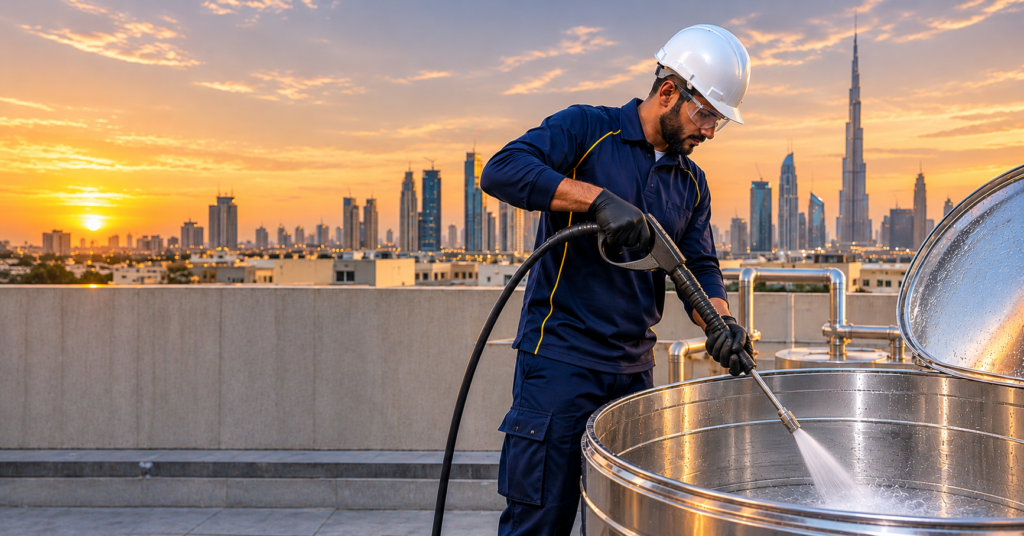
Step 5: Scrubbing and High-Pressure Washing
Walls, floor, ceiling and fittings are scrubbed with clean, food-safe tools and washed with high-pressure jets. This removes biofilm, algae and scale, which are the surfaces where bacteria tend to hide and regrow.
Step 6: Disinfection
A disinfectant suitable for potable water is applied at the correct concentration and left for the required contact time. This step eliminates remaining bacteria and other microorganisms, so it should never be skipped or rushed.
Step 7: Rinsing and Refilling
The tank is rinsed thoroughly until all disinfectant residue is gone, then refilled with fresh water from the supply. Proper rinsing prevents chemical taste and odour in your water.
Step 8: Water Testing and Reporting
Water samples are checked to confirm quality, and you should receive a service report or cleaning certificate documenting the work carried out. This paperwork is your proof of a job done properly.
This Step-by-Step Guide reflects best practice, so always confirm that your provider follows every stage, not just the washing.
Residential and Commercial Tanks
The process is broadly the same for every property, but the scale is not. Villas usually have one or two tanks and can be completed quickly, while towers, hotels, schools and labour accommodation may have several large tanks that need carefully scheduled shutdowns. Water tank cleaning for homes also tends to involve closer coordination with the household, so ask about timing and water availability in advance. For a closer look at what families should expect, see this guide to cleaning services for Dubai homes.
How Often Should You Clean Your Tank?
Most facility managers and providers recommend cleaning at least once or twice a year, depending on tank type, water quality, usage and location. Tanks in older buildings or those that show signs of cloudy water or odour may need attention sooner. Scheduling water tank cleaning on a fixed calendar is far easier than reacting to a problem. Our article on how often tanks should be cleaned in the UAE covers the details, and an annual cleaning plan is a simple way to stay consistent. Always check current Dubai Municipality requirements for your building type.
Choosing the Right Provider
A reliable water tank cleaning company should hold the necessary municipality approvals, use trained staff and proper safety equipment, follow a documented procedure and provide a report after every job. Ask how they handle disinfection and water testing, and be cautious of anyone who quotes a price without inspecting the tank. This checklist will help you choose the right provider with confidence.
Water Tank Cleaning with Blue Diamond
Blue Diamond Facility Management has served Dubai since 1995 and is approved by Dubai Municipality. Our trained teams follow every stage described above, from inspection to water testing, and our water tank cleaning service supports residential, commercial and industrial clients across all seven emirates. Every job ends with clear documentation, so you know your water is in safe hands. Contact Blue Diamond today to book your tank inspection.
Conclusion
Water Tank Cleaning is not just routine maintenance; it is a health safeguard for everyone who uses your water. With this Step-by-Step Guide, you can recognise a thorough, professional process and hold your provider to it. Keep your schedule consistent, insist on proper reporting, and use this step-by-step guide as your checklist every time.
Ready to Make the Smart Move?
Let Blue Diamond General Maintenance help you keep your villa spotless, dust-free, and healthy—all year long. From routine maintenance to deep cleaning, we’ve got you covered.
📞 Call us: +971 56 705 4223
📧 Email: Contact@bluediamondfm.com
🌐 Website: http://watertankcleaninguae.com
Frequently Asked Questions (FAQs)
How long does a professional tank cleaning take?
A standard residential tank usually takes a few hours. Large commercial tanks can take longer, depending on size, access and the amount of sediment.
Do I need to be at home during the service?
Someone should be available to provide access and confirm the water shutdown window. In buildings, the service is normally coordinated with property management.
Is the water safe to use straight after cleaning?
Once the tank has been rinsed, refilled and your provider has confirmed the water quality, it is ready to use. Follow any instructions given by your provider.
Can I clean the tank myself?
It is not recommended. Tanks can be confined spaces, and incorrect chemical use or poor rinsing can make water unsafe. A trained team has the equipment and procedures to do it properly.
What paperwork should I receive afterwards?
You should receive a service report or cleaning certificate that records the work and the water-quality check. Keep it for your records and for any building inspections.