
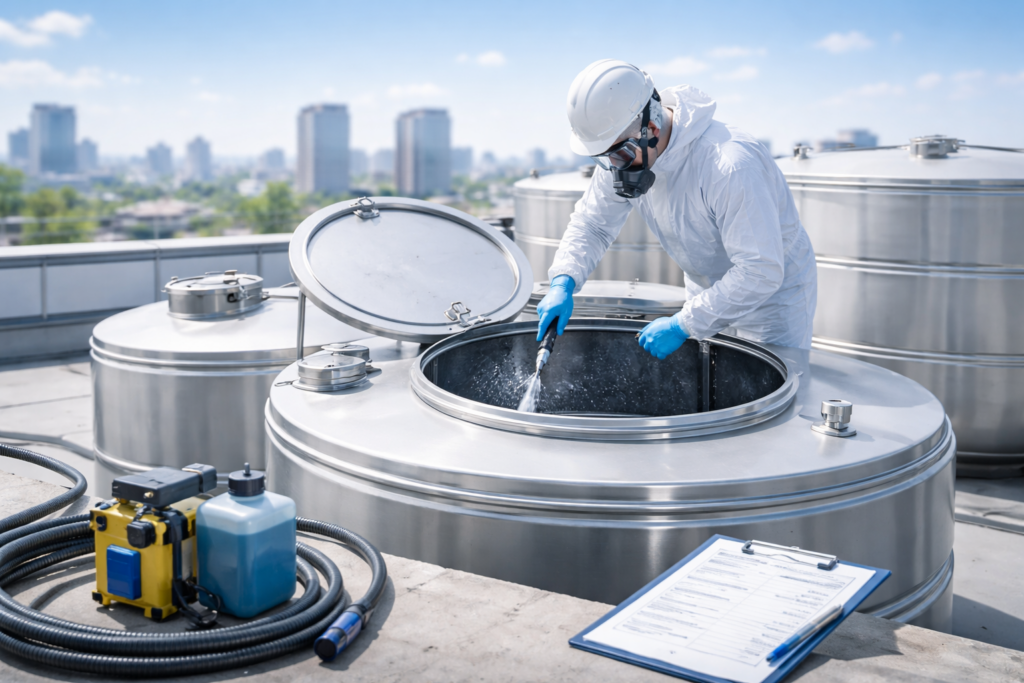
Water Tank cleaning is one of the most important yet frequently overlooked aspects of building maintenance. Whether you manage a residential villa, a commercial tower, or an industrial facility, the quality of water stored and distributed throughout your property depends entirely on how well your tank is maintained. A neglected tank becomes a breeding ground for bacteria, sediment, algae, and harmful pathogens — all of which pose serious risks to the health of occupants. Choosing the right professional cleaning company is not simply a matter of cost; it is a decision that directly impacts public health, regulatory compliance, and the long-term integrity of your plumbing infrastructure. This guide walks you through every factor you should consider before making that choice.
Why Professional Cleaning Is Non-Negotiable
A Water Tank that appears clean on the outside can harbour dangerous contamination within. Legionella bacteria, E. coli, and other waterborne pathogens thrive in stagnant or poorly maintained water systems and can cause severe illness if left unchecked. In the UAE, regulatory authorities mandate periodic cleaning and inspection of all storage tanks in residential, commercial, and hospitality properties. Professional cleaning companies have the equipment, chemicals, and trained personnel to not only clean but also disinfect and certify tanks to the required health and safety standards. Attempting to clean a large storage tank without proper expertise risks incomplete disinfection and potential liability.
Key Factors to Evaluate When Choosing a Cleaning Company
- Licensing and Regulatory Compliance
The first question to ask any prospective company is whether they hold the necessary licences issued by local authorities such as Dubai Municipality or the relevant emirate regulatory body. In the UAE, Water Tank cleaning companies must comply with strict guidelines governing cleaning agents, disinfection procedures, and post-cleaning water quality testing. Always request proof of current licensing before engaging any provider.
- Certifications and Industry Standards
Beyond local licensing, look for companies that adhere to internationally recognised standards such as BS 8558 (water system hygiene), WHO water quality guidelines, or ISO-certified quality management systems. These certifications signal that the company operates to a defined, auditable standard of practice — not simply a generic cleaning routine.
- Experience and Track Record
A company with years of demonstrated experience across diverse property types — high-rise residential buildings, hotels, hospitals, schools, and industrial sites — will have encountered and resolved the full range of Water Tank conditions. Ask for client references, case studies, and details of the largest or most complex projects they have handled. Experience breeds procedural efficiency and problem-solving capability that newer operators simply cannot match.
- Cleaning Process and Technology
Not all cleaning methods are equal. A reputable company should use a defined, multi-stage process that includes tank inspection and condition assessment, mechanical removal of sediment and biofilm, high-pressure washing, chemical disinfection using approved biocides, thorough rinsing, and post-cleaning water quality testing with certified laboratory results. Companies that offer only basic scrubbing without disinfection verification are not delivering a complete service.
- Transparent Reporting and Certification
After every Water Tank clean, you should receive a detailed service report documenting the condition of the tank before and after cleaning, the products used, dilution rates, contact times, and the results of bacteriological water testing. A certificate of cleaning that you can present to building inspectors or regulatory auditors is a sign of a professional, accountable operator.
- Insurance and Liability Coverage
Ensure the company carries adequate public liability insurance. If an incident occurs during cleaning — a contamination event, structural damage, or a health complaint from occupants — you need assurance that the company can be held accountable and that claims will be honoured.
Red Flags to Watch Out For
Be cautious of companies that offer unusually low prices without a clear explanation of their process, cannot produce current licences or certifications on request, do not include post-cleaning water testing as part of their service, are unable to provide written reports or cleaning certificates, or rely on verbal assurances rather than documented procedures. In an industry where the consequences of poor workmanship are measured in public health outcomes, cutting corners is never acceptable.
How Often Should a Water Tank Be Cleaned?
Dubai Municipality and most UAE health authorities recommend that every Water Tank be professionally cleaned and disinfected at least twice per year — once every six months. Properties in dusty environments, older buildings with ageing infrastructure, or facilities with high occupancy such as hotels and hospitals may require more frequent servicing. Scheduling regular cleans with a trusted provider ensures compliance, protects occupants, and prevents the accumulation of sediment and biological growth between service visits.
Conclusion
Choosing the right Water Tank cleaning company is a decision that should be made with care, diligence, and a clear understanding of what professional service looks like. Prioritise licensing, proven process, transparent reporting, and a demonstrable commitment to health and safety standards. The cost of a thorough, certified clean is a fraction of the liability that comes with waterborne illness or regulatory non-compliance. Invest in the right partner, schedule regular servicing, and give your occupants the clean, safe water supply they deserve.
Ready to Make the Smart Move?
Let Blue Diamond General Maintenance help you keep your villa spotless, dust-free, and healthy—all year long. From routine maintenance to deep cleaning, we’ve got you covered.
📞 Call us: +971 56 705 4223
📧 Email: Contact@bluediamondfm.com
🌐 Website: http://watertankcleaninguae.com
Frequently Asked Questions (FAQs)
How do I know if my water tank needs cleaning immediately?
Warning signs include discoloured or cloudy water coming from taps, unusual odours or taste in the water supply, visible sediment or debris in water, or a lapse of more than six months since the last professional clean. If any of these are present, arrange an inspection and cleaning without delay.
How long does a professional water tank cleaning take?
The duration depends on tank size, accessibility, and condition. A standard residential tank clean typically takes two to four hours. Larger commercial or rooftop tanks may require a full day or multiple visits, particularly if significant sediment buildup or biofilm contamination is present.
Is it safe for occupants to use water during the cleaning process?
No. The water supply to the tank should be isolated during cleaning and disinfection, and water should not be used for drinking, cooking, or personal hygiene until post-cleaning bacteriological tests confirm the water meets safe quality standards. A reputable company will advise you clearly on this timeline.
What cleaning agents are used and are they safe?
Professional companies use approved biocidal disinfectants — typically chlorine-based solutions — at regulated concentrations. After disinfection, tanks are thoroughly rinsed, and water quality is tested before the supply is restored. All chemicals used should comply with local health authority approvals and be listed in the company’s service report.
Can I request emergency or same-day water tank cleaning services?
Many established companies offer priority or emergency response services for urgent situations such as contamination events, regulatory inspections, or post-construction handovers. Confirm availability and response time commitments before signing a service agreement, particularly if you manage a high-occupancy or critical-use facility.